Young children
Short, playful lessons built on sounds and repetition, so small children stay focused and enjoy the class.
- 15–20 minute lessons for under-7s
- Parent update after every class
From the first Arabic letter to reading the Quran on your own, in live one-to-one classes with Al-Azhar qualified teachers. No Arabic needed to start.
No payment details for the trial · Classes on Zoom
Plans from
$15 / month
First 2 classes free
The basics
Noorani Qaida is a short beginner’s book that teaches how to read Quranic Arabic step by step. It starts with single letters, joins them into words, adds the vowel marks, and ends with the first Tajweed rules.
It was written by Sheikh Noor Muhammad Haqqani, and the name comes from his: Al-Qaida An-Nuraniyyah, “Noor’s rules”. Today it is the most widely used first book for children and adults learning to read the Quran in the USA, UK, Canada and Australia.
Noorani Qaida is not an Arabic language course. You learn to read and pronounce the Quran correctly, not to speak Arabic, so no Arabic background is needed and the whole course is explained in English.
Who it’s for
Same 17 lessons for everyone. The pace, class length and teaching style change with the learner.
Short, playful lessons built on sounds and repetition, so small children stay focused and enjoy the class.
They sound out words but mix up similar letters. We find where the mistakes begin instead of starting from page one.
A private class with a patient teacher, at your pace. Nobody else is in the room, so there is nothing to feel shy about.
Course outline
We follow the book in order. Each level ends with a short reading test, and the student moves on only when the teacher is satisfied. The 17 lessons are learning units, and each unit may need several classes depending on the student’s level and progress.
ا ب ت ث
بت نجح
الم يس
بَ بِ بُ
بً بٍ بٌ
أَحَدٌ
هٰذَا
بَا بُو
قَالُوا
قُلْ
رَبِّ
الَّذِينَ
عِلِّيِّينَ
الضَّالِّينَ
مِنْ بَعْدِ
Why a teacher
You can download the Noorani Qaida PDF for free. The PDF shows the letter. It cannot hear your child say it.
How classes work
Every class is live, one-to-one and built around reading out loud. The steps are the same for every learner; the pace and class length change with age.
The sound is corrected until it comes from the right place in the mouth.
One letter or word is highlighted on screen at a time.
Every class ends on a line the student reads alone.
Short daily practice matters more than a longer class.
How long does Noorani Qaida take?
For most children who start between ages 4 and 6, at three classes a week. Five minutes of daily practice at home matters most.
Your teachers
The same team teaches all our courses: huffaz and Ijazah holders who teach non-Arabic speakers in English. Female teachers for girls and sisters.
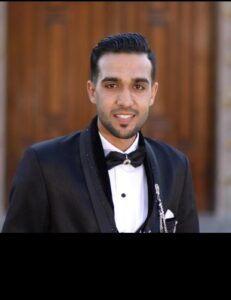
Hafiz of the Holy Quran
Hifz, Tajweed and Arabic reading for teens and adults.

Hafiza · Ijazah
Quran, hifz and Tajweed for girls and sisters.
Ijazah in Hafs recitation
Tajweed and Arabic phonetics for non-Arabic speakers.
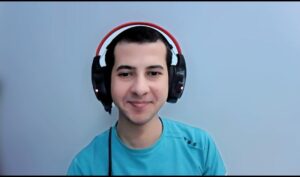
Al-Azhar University graduate
Quran, Tajweed and Islamic studies for children.
Why Alwafaa
Families in the USA, UK, Canada and Australia choose us for the same few reasons.
Native Arabic speakers who studied the Quran and Tajweed formally and explain every sound in clear English.
No groups and no waiting your turn. The whole class is your child reading and being corrected.
Experienced female teachers for girls, mothers and sisters who prefer one.
After school, evenings or weekends in Eastern, Pacific, UK or Australian time.
Parents know which page their child is on and what to practise at home.
From $15 a month, two free trial classes first, and you can change plans any time.
Fees
30-minute private classes with the same teacher. The first 2 classes are free.
| Classes a week | Hours a month | Monthly | Per class |
|---|
Pay monthly by PayPal, Visa or Mastercard. Change plans any time.
Reviews
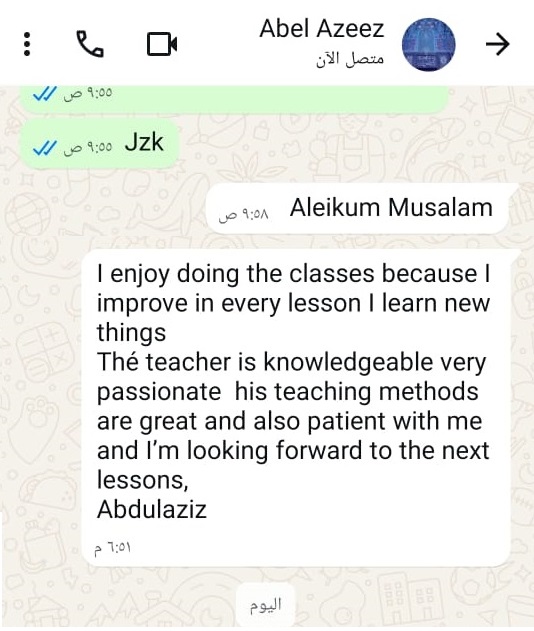
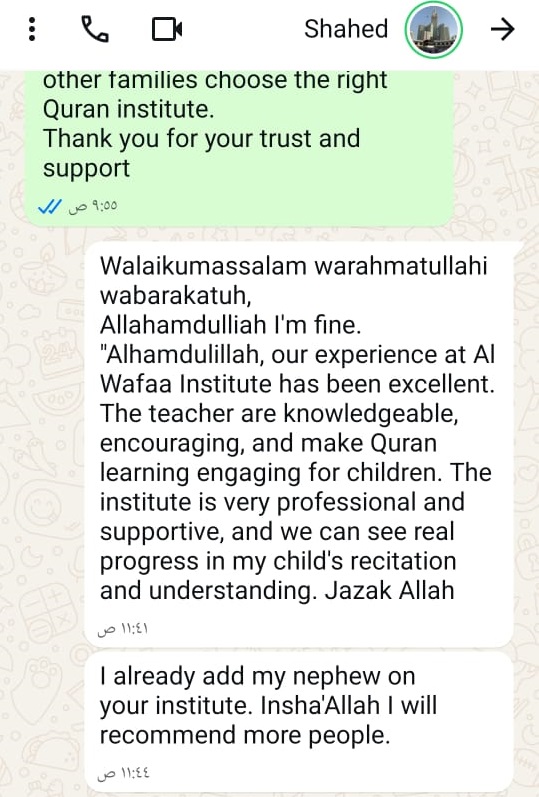
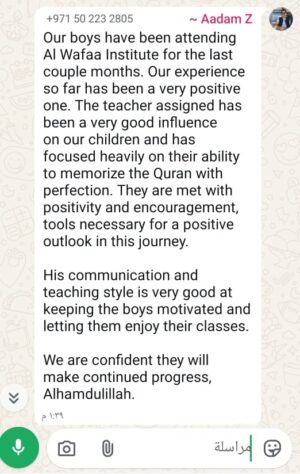
Free trial
Meet the teacher, see how your child responds, and find the right starting lesson. If it is not a fit, you owe nothing.
1
It takes one minute.
2
The teacher checks the level and teaches a first lesson.
3
Fixed days with the same teacher.
No payment details. We reply on WhatsApp.
After the Qaida
Most students stay with the same teacher and continue one course at a time.
You are here
4–6 months
Read letters and Quranic words correctly.
Alongside any station, add our Islamic studies course for Seerah, Fiqh and manners.
Free guides
Practical guides for parents and beginners, written by our teachers.
FAQ
Still not sure?
Two free classes answer most questions. Your teacher checks the level and you decide after.
Most children who start between ages 4 and 6 finish in 4 to 6 months with three classes a week. With two classes a week it takes about 8 to 10 months. Adults who practise daily are often faster.
The book has 17 lessons. These are learning units, not 17 classes: each unit may need several classes depending on the student’s level and progress. We teach them in three levels: the letters, vowels and long sounds, then Sukoon, Tashdeed and the first Tajweed rules.
Children can start from age four, once they can focus for about fifteen to twenty minutes. There is no upper age limit. See Noorani Qaida for kids for classes by age.
Plans start from $15 (£11) a month for one 30-minute class a week. Three classes a week, the pace we recommend, is $42 (£30) a month. The first 2 classes are free.
Yes. Many of our students are adults and new Muslims who never learned to read Arabic. Adult classes move faster and skip the children’s activities. See Noorani Qaida for adults.
You can, if your own pronunciation is correct. Many parents teach the letters at home and use a teacher to check and correct the sounds.
No. The course starts from the first letter and the teacher explains everything in English.
Yes. Choose a female teacher in the trial form and we will match your daughter or yourself with one.
No. Noorani Qaida teaches reading and introduces the first Tajweed rules. The complete rules come afterwards in the Tajweed course.
The teacher listens to the student read, finds the right starting lesson, and teaches a first short lesson. You decide afterwards whether to continue.