Online Arabic Classes for Kids : Helping Your Child Connect With Their Heritage
Arabic Language for Kids “My child only speaks English.” “They cannot communicate with their grandparents back home.” “I feel like they are losing their cultural and religious identity.”
If you are an Arab expat or a Muslim parent living in the West, these concerns are likely keeping you awake at night. Watching your child excel in their Western education is a source of pride, but seeing them lose their connection to the Arabic language can be deeply heartbreaking.

At Al Wafaa Institute, we understand that language is more than just words; it is identity, culture, and faith. Our highly engaging online Arabic classes for kids are designed to help your child speak, read, and write Arabic confidently, bridging the gap between their Western environment and their beautiful heritage.
Al-Azhar Quran tutors online
1. More Than Just a Language (The Identity Crisis)
When a child loses the ability to speak the language of their parents, they often experience a subtle disconnect from their roots. They might feel awkward during family gatherings or struggle to feel a sense of belonging.
Teaching them Modern Standard Arabic (Fusha) or giving them a strong foundation in reading and speaking ensures they remain confidently rooted in their identity. Furthermore, because Arabic is the language of Islam, learning it naturally paves the easiest path for them to eventually understand the Quran and the Hadith.
2. Why Traditional Methods Fail Children in the West
Many parents try to teach their kids Arabic at home, which often turns into a stressful battle of wills. Alternatively, they send them to weekend community schools where children sit in crowded classrooms, passively staring at a whiteboard for hours. These traditional, rigid methods often make children resent the language.
Children learn best through play, interaction, and positive reinforcement. If the learning process isn’t fun, it won’t be effective.
3. The Al Wafaa Approach: Immersive and Fun
Our online Arabic curriculum is specifically designed for children growing up in English-speaking countries. We don’t just teach the alphabet; we immerse them in the language.
-
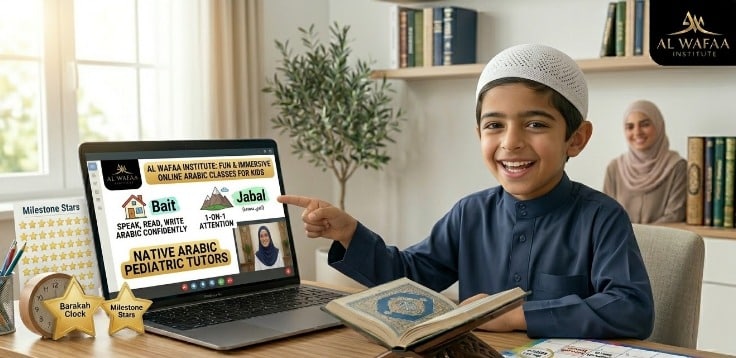
Interactive Digital Classrooms: Our Al-Azhar certified tutors use colorful digital slides, interactive games, and visual storytelling to keep your child glued to the screen.
-
Conversational Focus: We emphasize practical speaking and listening skills. Your child will learn how to introduce themselves, talk about their day, and hold basic conversations.
-
Native-Speaking Pediatric Tutors: Our teachers are native Arabic speakers who specialize in pediatric education. They are trained to be energetic, smiling, and infinitely patient.
4. 1-on-1 Attention for Maximum Progress
Every child learns at their own pace. In a group class, a shy child might never speak up. Our 1-on-1 online private sessions ensure that your child gets 100% of the teacher’s attention. The tutor will adapt the lesson to your child’s specific interests—whether they love animals, sports, or space—making the vocabulary highly relevant and memorable.
Give Them the Gift of Their Heritage
Language is a bridge. By investing in your child’s Arabic education today, you are giving them the tools to connect with their grandparents, understand their religion, and be proud of who they are.
👉 [Ready to hear your child speak Arabic with confidence? Click Here to Book Your FREE Arabic Evaluation and Trial Class at Al Wafaa Institute today!]
Frequently Asked Questions (FAQs)
What dialect of Arabic do you teach? We focus on Modern Standard Arabic (Fusha), which is the universal standard understood across the entire Arab world. It is also the necessary stepping stone for understanding Quranic Arabic.
My child doesn’t know a single Arabic letter. Can they join? Absolutely! Our beginner levels are designed for children with zero prior knowledge of Arabic. We start with the absolute basics—the alphabet and phonetics—using fun songs and visual memory games.
How long are the online Arabic classes for kids? To maximize focus and prevent burnout, our classes for young children are typically 30 minutes long. This short, highly interactive burst of learning is scientifically proven to be the most effective duration for pediatric language acquisition.