
Noorani Qaida for Kids: Online Classes for Ages 4 to 14
Live 1-on-1 Noorani Qaida classes for kids on Zoom, from the first Arabic letter to reading the Quran alone. For families in the USA, UK, Canada and Australia, with a short update to you after every class.
No payment details for the trial · You can sit in on every class
120+
students and parents
12+
qualified teachers
1,000+
one-to-one hours
4+
years teaching online
Quick answer
What age should a child start Noorani Qaida?
Most children are ready at 4 or 5, once they can sit for 15 minutes and repeat a sound back. Starting between 4 and 6 with 3 classes a week, most finish the 17 lessons in 4 to 6 months. With 2 classes a week it takes about 8 to 10 months. In our Noorani Qaida for kids classes, children aged 7 to 14 who already read with mistakes start at the lesson where the mistakes begin.
By age
Noorani Qaida for Kids by Age: 4 to 14
Every child follows the same 17 lessons. Our Noorani Qaida classes for kids change length, pace and style with age.
Noorani Qaida for kindergarten
Short, playful classes built on sounds and repetition. A parent sits nearby for the first few classes.
First-time readers
30-minute classes after school or at weekends. Letters, vowel marks and joining, one level at a time.
Kids who read with mistakes
They sound out words but mix up similar letters. We find the first weak lesson and fix from there.
Inside a class
Inside a 30-Minute Noorani Qaida Class for Kids
Young children learn in short steps, so the activity changes every few minutes. Under age 7, the same steps fit into 15–20 minutes.
-
0–3 min
Warm-up
A quick review of last class’s letters.
-
3–12 min
Listen and repeat
1 or 2 new sounds, repeated until they come from the right place.
-
12–20 min
Point and read
Your child reads from the shared page and is corrected on the spot.
-
20–26 min
Letter game
Spot-the-letter and sound challenges.
-
26–30 min
Small win
The class ends on a line your child reads alone, plus 5 minutes of practice for home.
The path
Noorani Qaida Lessons for Kids: 17 Lessons in 3 Levels
We follow the book in order. A child moves to the next level only after passing a short reading test. See all 17 lessons.
Letters and their sounds
Single letters, look-alike pairs and sounds English doesn’t have, like ع ح ق.
Vowel marks and joining
Fatha, kasra, damma and tanween, then joining letters into words.
Reading like the Quran
Sukoon, shaddah and long vowels, then the first lines from the Mushaf.
What your child can do at the end
For parents
You Know What Happened in Every Class
After each Noorani Qaida lesson, your child’s teacher sends you a short note: what your child learned, what went well and 1 thing to practise.
Example parent update
Today: Lesson 5, letters with fatha
Did well: read ب ت ث with no help
Practise: خ and ح, 5 minutes a day
Next class: Thursday, 5:30 pm
Your teachers
Your Online Noorani Qaida Teachers
The same team teaches all our courses: huffaz and Ijazah holders who teach non-Arabic speakers in English. Female teachers for girls and sisters.
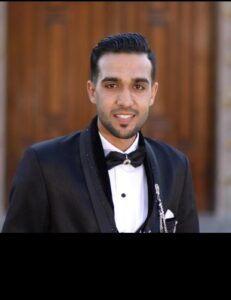
Abdullah Eljohary
Hafiz of the Holy Quran
Hifz, Tajweed and Arabic reading for teens and adults.

Mona Ahmed Youssef
Hafiza · Ijazah
Quran, hifz and Tajweed for girls and sisters.
Ustadhah Shaimaa Ali
Ijazah in Hafs recitation
Tajweed and Arabic phonetics for non-Arabic speakers.
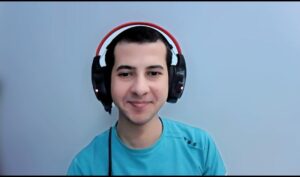
Muhammed Hanafy
Al-Azhar University graduate
Quran, Tajweed and Islamic studies for children.
Your options
Noorani Qaida for Kids: Online, Mosque or at Home?
All 3 can work. What matters most for a young child is that every letter is heard and corrected.
Weekend mosque class
Community, routine and friends who learn too.
In a group, your child reads aloud for only a few minutes each week.
Teaching at home
Free and flexible, with a PDF or an app. Our guide shows how.
Works well only if your own pronunciation is correct.
1-on-1 online class
Every letter heard and corrected, at a time that fits school.
Costs more than free options. Plans start at $15 a month.
Fees
Noorani Qaida for Kids: Fees in Your Currency
30-minute private classes with the same teacher. The first 2 classes are free.
| Classes a week | Hours a month | Monthly | Per class |
|---|
Pay monthly by PayPal, Visa or Mastercard. Change plans any time.
Reviews
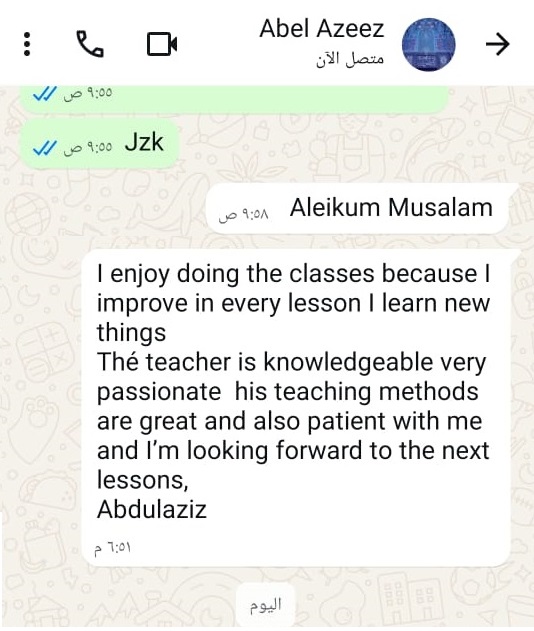
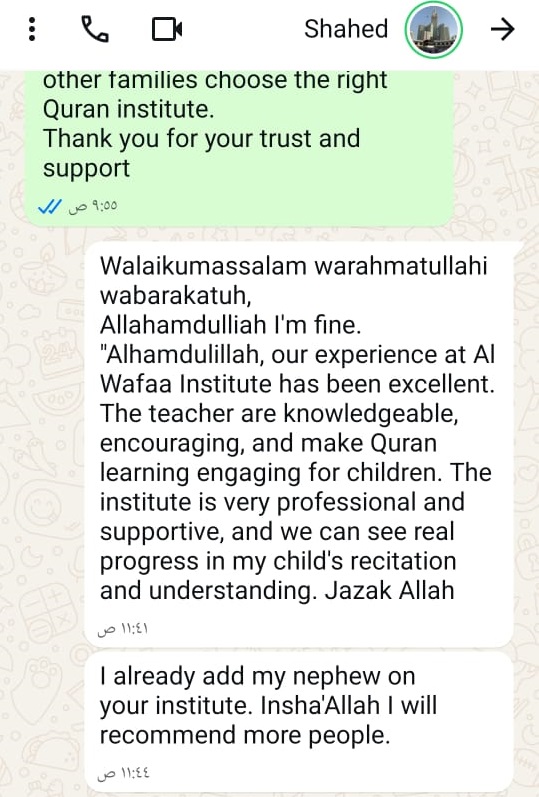
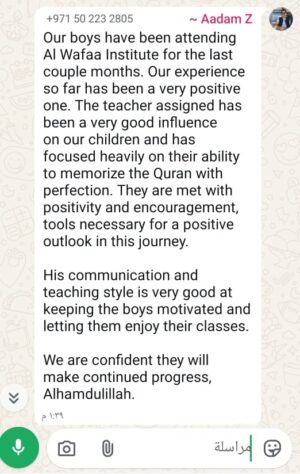
What Parents Say About Our Noorani Qaida Classes for Kids
Free trial
Book 2 Free Noorani Qaida Classes for Your Child
Meet the teacher, see how your child responds, and find the right starting lesson. If it is not a fit, you owe nothing.
1
Fill in the form
It takes one minute.
2
Two free classes on Zoom
The teacher checks the level and teaches a first lesson.
3
Pick your schedule
Fixed days with the same teacher.
Your free trial
No payment details. We reply on WhatsApp.
FAQ
Noorani Qaida for Kids: Parents’ Questions
Still not sure?
Two free classes answer most questions. Your teacher checks the level and you decide after.
Can a kindergarten child learn Noorani Qaida online?
Yes. In our online Noorani Qaida course for kids, children from age 4 have 15–20 minute classes built on sounds, not reading. A parent sits nearby for the first few classes until your child is comfortable on Zoom.
How long does it take a child to finish Noorani Qaida?
Most children who start at 4 to 6 finish in 4 to 6 months with 3 classes a week, or 8 to 10 months with 2. Older children are often faster.
My child doesn’t speak Arabic. Is that a problem?
No. Noorani Qaida teaches reading, not speaking, and the teacher explains in clear English.
Can my child have a female teacher?
Yes. Choose “Female teacher” in the form and we match your child with one.
My child reads but makes mistakes. Do they start from page 1?
No. The first free class includes a level check, and your child starts at the first lesson where mistakes appear.
What class times do you offer?
Teachers are available 24/7, so we set after-school or weekend times in your time zone, whether you are in the USA, UK, Canada or Australia.
What comes after Noorani Qaida?
Fluent Quran reading, then Tajweed or Hifz, with the same teacher if you like.
Start Noorani Qaida for Kids With 2 Free Classes
Meet the teacher, see how your child responds, then decide.